
- By Admin
-
 Construct Ion
-
 0 Comments
- News
- 716
Home Lift Partnership After the Sale: Installation Scope, FAQ and Long-Term Support Terms
What a home lift partnership covers after the sale: installation scope, 24/7 remote and on-site support, one-year warranty, distributor training, maintenance costs and the terms to confirm in writing.
Home Lift Partnership After the Sale: Installation Scope, FAQ and Long-Term Support Terms
The cabin, the drive and the finish are the visible half of a home lift purchase. The other half — installation scope, acceptance criteria, warranty start date, service routing and post-warranty maintenance terms — is what decides whether that lift is still running quietly in year five. This article sets out the installation and after-sales scope that FRANZ Intelligent Elevator Co., Ltd. documents for buyers and distributors, the terms worth fixing in writing before a contract is signed, and the risks that appear when those terms are left open.
Short answer — what a documented home lift partnership usually covers
- Installation support: 24/7 online remote support and guidance, plus offline on-site technical guidance or professional installation.
- Service layer: after-sales service is normally delivered through the local distributor network.
- Distributor support: after-sales guidance and training, factory training, and online solutions for first-response problem solving.
- Warranty: one year for the whole unit.
- Remote visibility: an LOT system inside the lift, so distributors can check lift status at any time.
- Commercial entry point: minimum order quantity of one unit; lead times of 25–30 days for shaft-built cabin lifts, 35–40 days for glass lifts and 45–50 days for platform lifts.
Problem Definition: Where Home Lift After-Sales Agreements Break Down
Most after-sale friction in residential lift projects starts at a boundary that nobody wrote down. Across the reference projects described later in this article, four boundaries recur.
1. The site-readiness boundary
Installation and commissioning take 7–15 working days when site conditions are ready. That window extends when civil works fail to meet requirements. A buyer who treats the equipment dispatch date as the occupancy date has already lost the schedule argument, because the installation clock only starts once the site is genuinely ready.
2. The responsibility boundary
In cross-border projects the manufacturer typically supplies installation guidance, technical support and training, while day-to-day service runs through the local distributor network. When that split is undocumented, the homeowner contacts the factory, the distributor contacts the importer, and the response time becomes everybody's problem and nobody's obligation.
3. The warranty-to-maintenance boundary
The standard warranty is one year for the whole unit. Maintenance after that period is a separate, country-specific cost — in China the standard reference is currently 3,000–5,000 RMB per year. A quotation that stops at the warranty statement leaves the largest recurring number in the project unaddressed.
4. The project-timeline boundary
The Australian mall retrofit, the Russian private villa and the Indonesian hotel installation each involved one unit and a stated project duration of about two years. A two-year project horizon means the supplier relationship spans specification, site works, delivery, commissioning, warranty and the first maintenance cycle. Service expectations have to be scheduled against those phases, not against a single delivery date.
Industry Background: Why the Service Half Now Carries More Weight
The residential segment is large enough that service design is no longer a rounding error in the purchase decision. Grand View Research puts the global residential elevator market at USD 54.61 billion in 2024. Roland Berger projects the modernization segment of the elevator market growing at a CAGR of 7% through 2030, which is a direct signal that installed-base service, retrofit and life-cycle work is where value keeps accumulating after the original sale.
Two regulatory developments reinforce the same direction. The transition from EN 81-20/50 to ISO 8100-1 and ISO 8100-2 is harmonizing global elevator safety standards, according to TÜV SÜD — which pushes buyers to agree on a named standard basis and a documented acceptance file rather than a verbal assurance. In parallel, regional safety expectations remain genuinely local: the Australian reference project had to comply with Australian high-safety standards, the Indonesian hotel project had to meet local cultural and barrier-free requirements, and the Russian villa project had to answer household safety concerns during power outages and object detection.
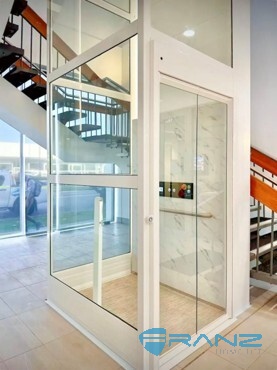
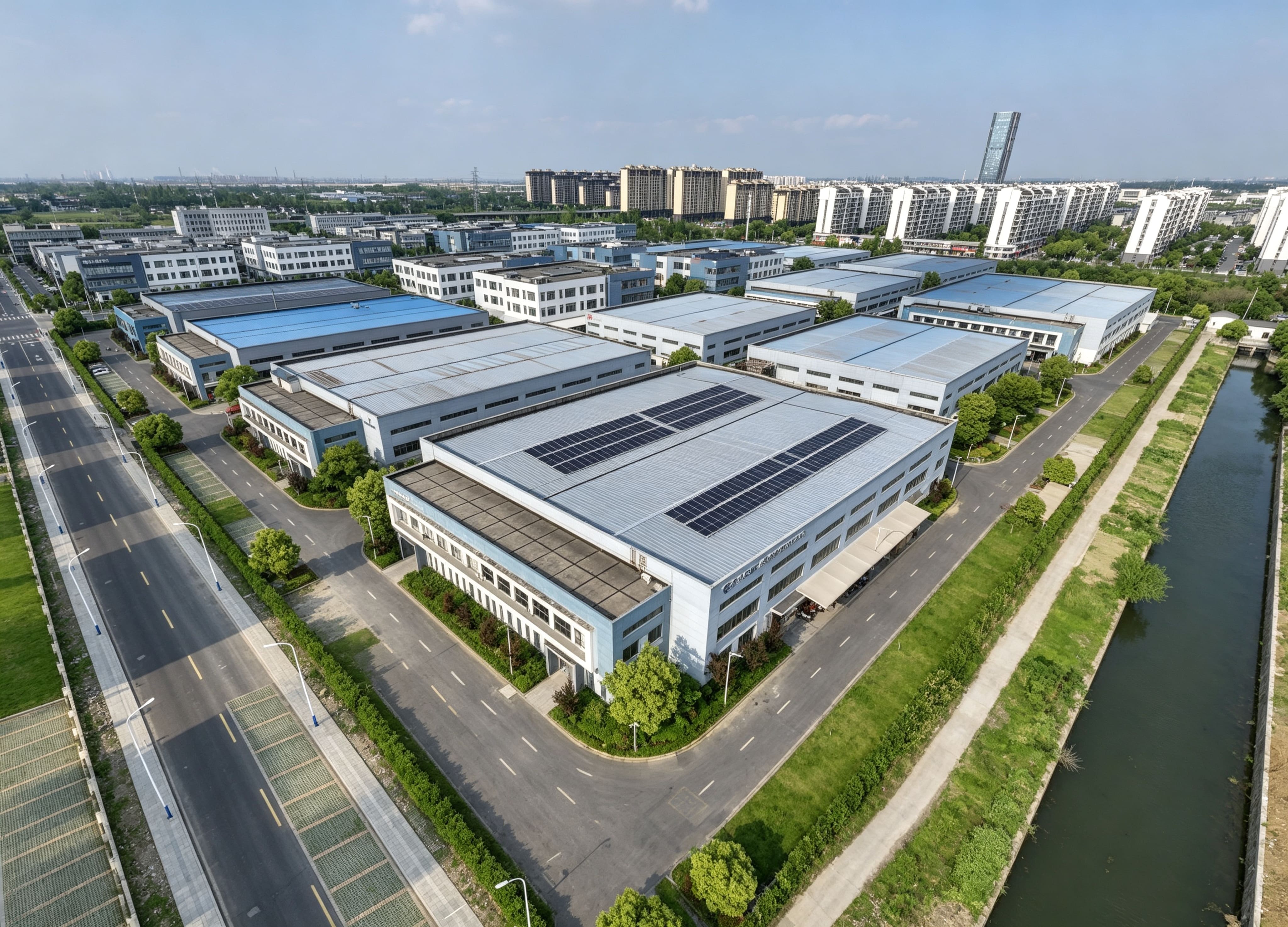
FRANZ Intelligent Elevator Co., Ltd. is a Suzhou-based manufacturer of premium home lifts, founded in 2019 and operating a 30,000 m² facility with 310 employees, 32 R&D engineers and annual output of 6,000 units. Exports account for 15% of output, with markets including Southeast Asia, Russia, Australia, the Middle East and Africa, supported by more than 220 showrooms across 30+ countries. In 2025 the company's commercial platform elevators received the TÜV Rheinland EU EC Whole-Machine Safety Certification. Its home lift range covers three families: the FT/FJ shaft-built cabin lift, the FT/FJ glass lift and the FP-S/E platform lift.
Detailed Solution: How the Installation and After-Sales Scope Is Structured
Installation support is delivered in two layers
Online support runs 24/7 and covers remote guidance through the installation sequence. Offline support covers on-site technical guidance or professional installation. The stated purpose is practical: smooth on-site implementation and fewer civil-work complications. For a buyer assembling a project team in a market where lift technicians are scarce, this two-layer model is the difference between a stalled shaft and a commissioning date.
Distributor enablement carries the local service load
Distributors receive comprehensive after-sales guidance and training, plus online solutions so that customer issues can be resolved at the first contact point. Factory training is listed among the after-sales services, which matters for partners building a service business rather than simply reselling equipment. For end customers, the company helps locate local dealer resources so that service is delivered professionally and locally rather than remotely and slowly.
Warranty and maintenance are two separate numbers
The standard warranty covers one year for the whole unit. Annual maintenance is priced by market: costs differ by country, with a standard reference of 3,000–5,000 RMB per year in China. Buyers evaluating a premium home lift should therefore ask for both numbers at quotation stage — the warranty term and the expected local maintenance cost — because only the first one usually appears in a supplier's standard offer.
Remote status visibility reduces blind service visits
An LOT system is installed in the lift, allowing distributors to know its status at any time. That capability sits alongside the product-level safety design: millimeter-wave radar continuously senses human presence and posture inside the cabin, and if an anomaly such as a fall or prolonged inactivity is detected, an alert is triggered automatically. Paired with the IoT platform, the system notifies the maintenance team of an abnormal situation without waiting for a manual call.
Capacity and lead times set the service calendar
Monthly capacity is 500 units against annual output of at least 6,000 units, and every unit is 100% tested. Lead times are 25–30 days for shaft-built cabin lifts, 35–40 days for glass lifts and 45–50 days for platform lifts. Factory-direct customization shortens the customization cycle and speeds up project delivery, and the minimum order quantity is one unit — which is why a single-unit pilot order is a realistic way to test both product and service before committing a programme.
Step-by-Step Breakdown: From Scope Agreement to Post-Warranty Renewal
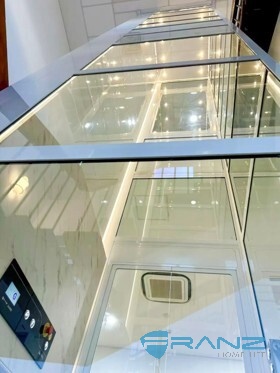
- Confirm site conditions before fixing the installation date. Installation and commissioning take 7–15 working days only when site conditions are ready. Where a building cannot accommodate conventional construction, the shallow-pit approach used in the Australian mall shows what to plan for: shaft-less and pit-free installation, aluminum frame with laminated tempered glass, and a threshold-free flat-floor design.
- Write the service matrix. Name who installs, who commissions, who provides first-line service and who holds spare parts. The standard model is manufacturer guidance and training plus local distributor delivery; the written matrix is what makes that model enforceable.
- Agree acceptance criteria and the documentation pack. Confirm 100% testing of the unit, name the standard basis that applies in the destination market — Australian high-safety standards in the Australian case, for example — and note that ISO 8100-1 and ISO 8100-2 are replacing EN 81-20/50 as the harmonized reference. List every safety function to be demonstrated at handover: emergency leveling, anti-pinch detection, emergency call, and any radar-based anomaly alerting included in the configuration.
- Fix the warranty start date at acceptance, not at shipment. The whole-unit warranty is one year. On a project with a two-year horizon, the gap between dispatch and handover can consume a meaningful share of that year if the start date is left ambiguous.
- Agree the post-warranty maintenance benchmark. Record the expected annual maintenance cost for the destination market, using the 3,000–5,000 RMB per year China reference only as a calibration point, and confirm how consumables and wear parts are supplied.
- Set response and escalation paths. Combine the 24/7 remote channel, the local dealer route and LOT status visibility into one documented path, with named contacts on both sides.
- Review annually and renew. A home lift partnership is a multi-year relationship. An annual review of service logs, response times and parts consumption converts a warranty arrangement into a long-term support agreement.
What to confirm in writing before signing
- Scope split: equipment supply, installation labour, commissioning and first-line service.
- Site-readiness definition and the conditions that would extend the 7–15 working day installation window.
- Named standard basis plus the acceptance test list and documentation set.
- Warranty term (one year, whole unit) and the exact date it starts.
- Expected annual maintenance cost in the destination market and what it includes.
- Remote support hours (24/7), escalation contacts and response expectations.
- Training: who attends factory training, and who is certified to service the unit locally.
- Lead time by product family — 25–30 days shaft-built cabin lift, 35–40 days glass lift, 45–50 days platform lift — and the customization steps that could move those dates.
Use Cases: Three Installations and What They Reveal About Service Scope
Australia: a shopping mall retrofit with a two-year project horizon
In an Australian shopping mall, one FP-S/E Series platform lift was installed into an existing building. The shallow-pit solution created options that had not existed for adding an elevator to existing structures, and the aluminum shaft with thickened glass kept the structure transparent yet robust. Threshold-free access lets trolleys, wheelchairs and prams roll in and out without hassle, and a one-touch emergency dial allows passengers to call for help at any time — pressing and holding the button for more than ten seconds activates automatic rescue mode when needed. A shock-absorption system keeps rides smooth and quiet even during peak hours, and the equipment set includes emergency leveling, an anti-pinch device and a one-key emergency call system.
Service implication: a public, high-frequency site needs a documented response path and a barrier-free acceptance check, not just a warranty certificate. Stable and safe operation with low noise was the reported outcome.
Russia: a private villa where outage safety defines the service brief
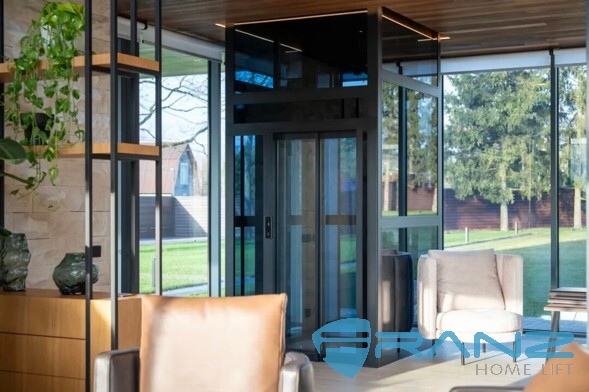
An FT/FJ Series glass lift was installed in a Russian private villa for daily family transport, with a load capacity of 400–800 kg and speed options of 0.4, 0.63 or 1.0 m/s. The configuration addressed household safety during power outages and object detection through emergency levelling and anti-pinch mechanisms that stop and open the door at the nearest floor. The four-sided transparent glass cabin delivers a 360-degree view, millimeter-wave radar sensing detects anomalies such as falls or intoxication, and thickened explosion-proof tempered glass adds impact resistance. Touch-screen control replaced conventional buttons, and silent steel-belt traction keeps operational noise to 40 dB or below.
Service implication: for a private household, the critical service question is what happens in the first minutes of an incident. Radar detection plus automatic alerting shortens the path from anomaly to response — and the response owner should be named in the agreement.
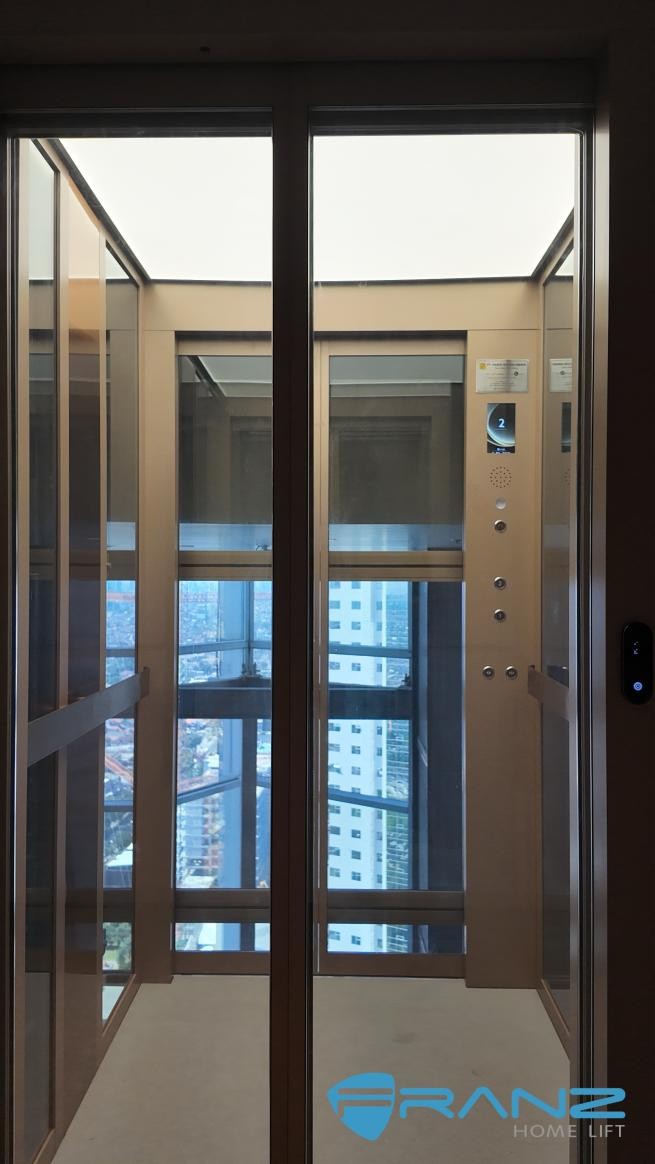
Indonesia: a hotel where uptime and accessibility are the service metrics
A luxury hotel in Indonesia uses a glass lift for passenger transportation, configured with a champagne-gold metal frame and a large-capacity car to align with local Muslim cultural characteristics. Cabin glass with high pressure and impact resistance provides protection for passengers and staff. The touchscreen control panel supports facial recognition and multi-language switching, with high-contrast mode, font magnification and voice announcement for foreign guests and people with disabilities. An automatic leveling system stops and opens the doors at the nearest floor in emergencies such as a sudden power outage or malfunction, and a one-click self-recovery function supports emergency rescue.
Service implication: hospitality buyers should require that accessibility functions and the automatic leveling response are demonstrated at handover, because those are the functions guests and inspectors will test first.
Comparison Table: Reference Projects and the Service Terms They Imply
The three installations below are documented reference projects, each covering one unit. They are compared here on site type, product, verified safety and service features, and the after-sales focus each one implies.
| Reference project | Site type | Product | Verified features relevant to service | Scale and duration | Service focus to agree |
|---|---|---|---|---|---|
| Australia — shopping mall retrofit | Existing commercial building, high-frequency public use | FP-S/E Series platform lift | Shallow-pit solution; aluminum shaft with thickened glass; threshold-free access; one-touch emergency dial with automatic rescue mode; emergency leveling and anti-pinch device; one-key emergency call | 1 unit; about 2 years | Public-duty response path, barrier-free acceptance check, noise and ride-quality verification |
| Russia — private villa | New-build luxury residence, private household use | FT/FJ Series glass lift | Emergency levelling and anti-pinch; millimeter-wave radar anomaly detection; thickened explosion-proof tempered glass; silent steel-belt traction at ≤40 dB; touch-screen control | 1 unit; about 2 years | Outage-safety drill at handover, named first responder, radar alert routing |
| Indonesia — luxury hotel | Commercial hospitality, multi-floor guest transport | Glass lift | Automatic leveling on power failure; high-pressure and impact-resistant cabin glass; multi-language touchscreen with face recognition and voice broadcast; one-click self-recovery | 1 unit; about 2 years | Uptime commitment, accessibility function demonstration, staff training and multilingual documentation |
The documented commercial and service terms that apply across the range are summarised below.
| Term | Documented position |
|---|---|
| Installation support | 24/7 online remote support and guidance; offline on-site technical guidance or professional installation |
| Installation and commissioning time | 7–15 working days when site conditions are ready; extended where civil works do not meet requirements |
| Warranty | One year for the whole unit |
| Maintenance cost reference | Country-specific; standard reference 3,000–5,000 RMB per year in China |
| After-sales delivery model | Local distributor network; distributors receive after-sales guidance, training and online solutions; end customers are routed to local dealer resources |
| Remote diagnostics | LOT system installed in the lift; distributors can check lift status at any time |
| Minimum order quantity | 1 unit |
| Lead times | 25–30 days shaft-built cabin lift; 35–40 days glass lift; 45–50 days platform lift |
| Quality control | 100% test |
FAQ: Long-Term Home Lift Support Questions Buyers Ask
1. What acceptance criteria and documentation should be agreed before a home lift is signed off?
Three items should be fixed in the contract. First, that every unit is 100% tested before shipment. Second, the standard basis that applies in the destination market — the Australian reference project, for example, was specified to comply with Australian high-safety standards, and the industry is moving from EN 81-20/50 to ISO 8100-1 and ISO 8100-2 as the harmonized reference. Third, a list of safety functions to be demonstrated at handover, such as emergency leveling, anti-pinch detection, emergency call and radar-based anomaly alerting. The warranty should be stated as starting at acceptance, with a one-year term for the whole unit.
2. Which installation and after-sales services are included after purchase?
Installation is supported online and offline: 24/7 remote support and guidance, plus on-site technical guidance or professional installation. After-sales service is normally delivered through the local distributor network. Distributors receive comprehensive after-sales guidance and training, factory training, and online solutions so customer issues can be resolved at the first contact point. End customers are helped to locate local dealer resources so that service is professional and localized rather than remote. Remote visibility comes from the LOT system inside the lift, which lets distributors know its status at any time.
3. What does maintenance cost after the one-year warranty ends?
Cost depends on the country. The standard reference currently used is between 3,000 and 5,000 RMB per year in China, and buyers in other markets should treat that figure as a calibration point rather than a quotation. Before signing, ask for the expected annual maintenance cost in the destination market, confirm what the figure includes, and agree how wear parts and consumables are supplied after the warranty period closes.
4. Can a buyer or distributor order a single unit to validate the product and the service?
Yes. The minimum order quantity is one unit, so a pilot installation is an available route for testing both hardware and the service chain. Lead times are 25–30 days for shaft-built cabin lifts, 35–40 days for glass lifts and 45–50 days for platform lifts, and factory-direct customization shortens the customization cycle. Once site conditions are ready, installation and commissioning take 7–15 working days. A pilot unit is also the cheapest way to test response speed, documentation quality and technical guidance before committing to a multi-unit programme.
5. How long does installation take on site, and why did the reference projects run about two years?
The on-site installation and commissioning window is 7–15 working days when site conditions are ready, and it extends when civil works fail to meet requirements. The two-year figure attached to the Australian, Russian and Indonesian reference projects describes the full project duration — one unit per project, from project start through to completion — not the on-site installation window. Buyers should therefore schedule service expectations against the project phases: specification, site works, delivery, commissioning, warranty year and first maintenance cycle. If you want to test that schedule against your own project, you can request a sample and project-specific quotation and confirm the timeline in writing before signing.
Conclusion: Write the Service Terms Before You Write the Purchase Order
A home lift is a fifteen-year relationship sold as a piece of equipment. The documented scope — 24/7 remote support plus on-site guidance or professional installation, after-sales through the local distributor network, distributor training, a one-year whole-unit warranty, LOT status visibility and a minimum order quantity of one unit — is designed to make that relationship operable rather than aspirational. The rest depends on what a buyer pins down: a named standard basis, an acceptance list, a warranty start date at handover, a maintenance benchmark for the destination market and a named first responder.
The Australian mall retrofit, the Russian private villa and the Indonesian hotel each ran for about two years on a single unit. In projects of that length, the supplier who answers the phone in year two is worth more than the specification sheet that looked strongest in week two. Confirm the installation scope, the acceptance criteria and the long-term support terms in writing — then buy the equipment.
Next step: sample, quotation or distributor pack
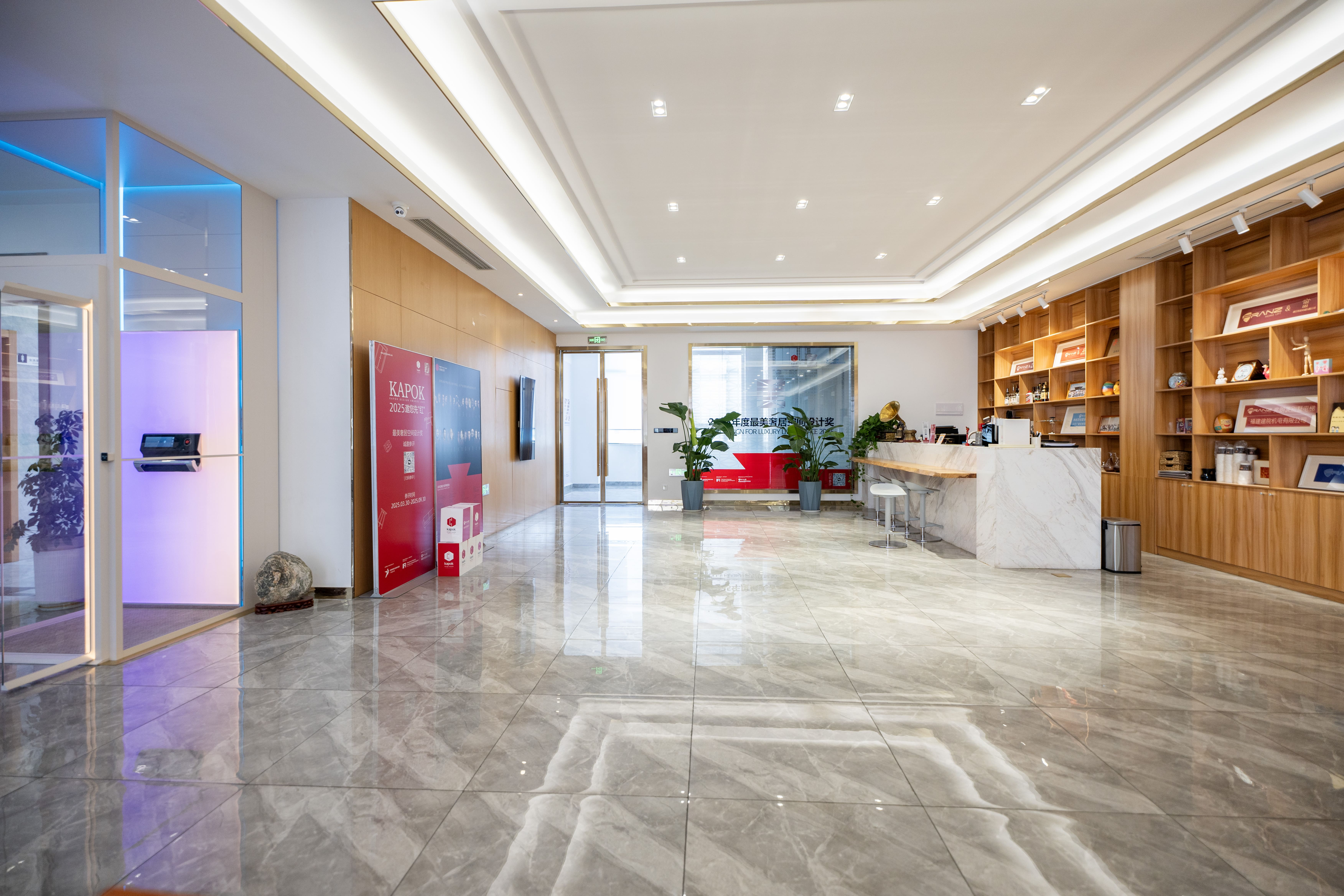
FRANZ Intelligent Elevator Co., Ltd. supplies premium home lifts — shaft-built cabin lifts, glass lifts and platform lifts — in single-unit quantities, with installation guidance, distributor training and a one-year whole-unit warranty.
Download the product catalogue: Franz Civil & Glass Home Lift Brochure (PDF)
Contact: Liyi Luo, Director of Overseas Department · Email: luoll015@franzlift.com · Tel / WhatsApp: +86 18595625216 · Website: en.franzlift.com · Address: B5-2, No.199 Hongwu Avenue, High-tech Zone, Zhangjiagang, Jiangsu, China